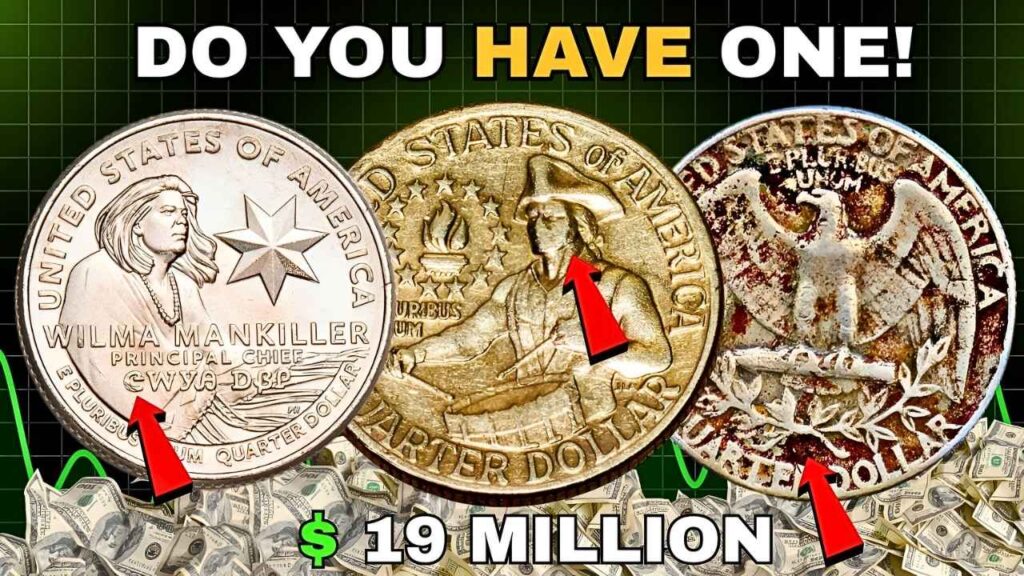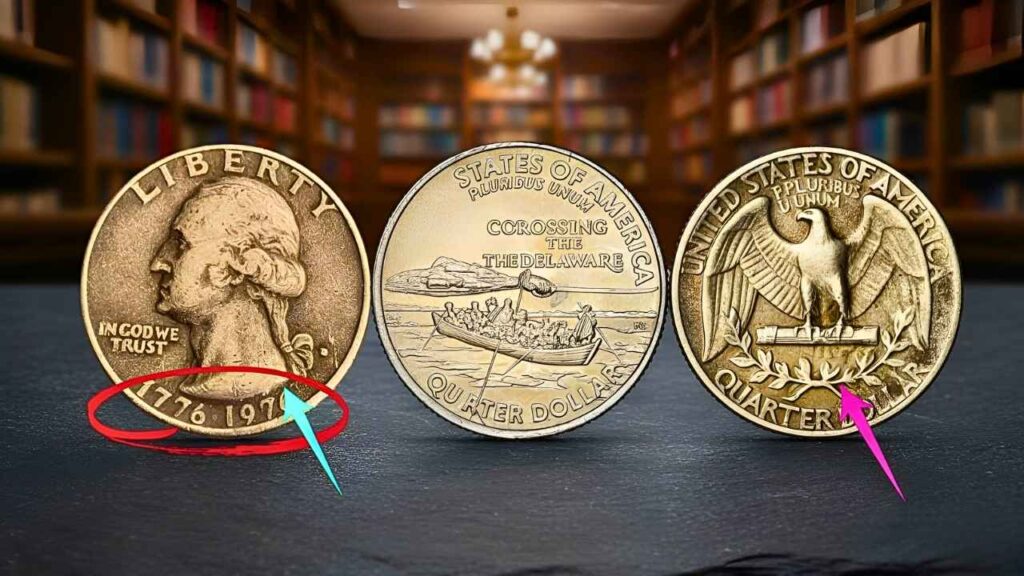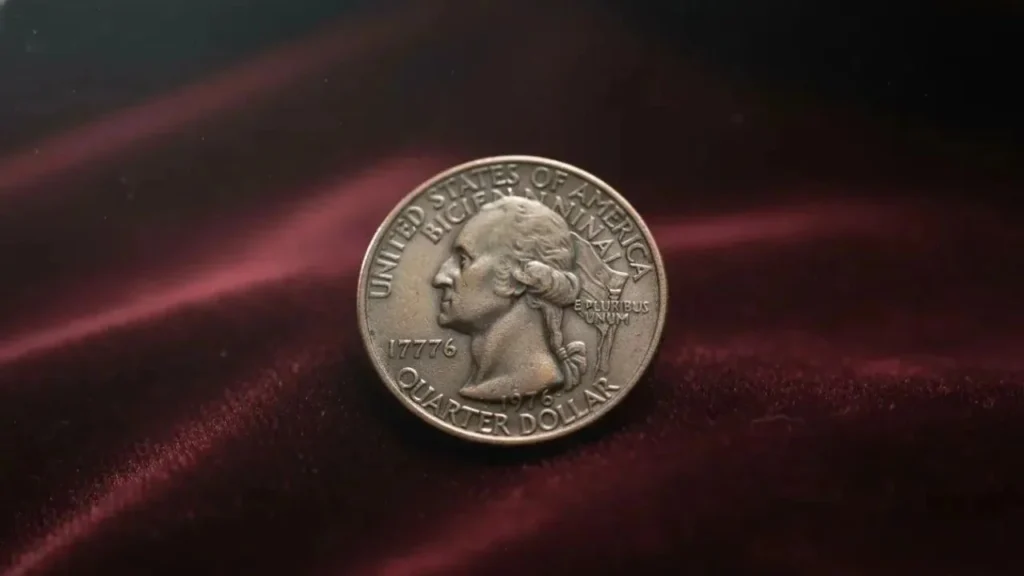

The Bicentennial Quarter 2026 Launched as a renewed focus for numismatists worldwide, celebrating the enduring legacy of the 1776–1976 United States commemorative series. Originally issued to honor the 200th anniversary of American independence, this coin remains a staple in American culture due to its unique dual-date “1776–1976” and the iconic colonial drummer reverse.
While billions were struck for general circulation, the 2026 market has seen a massive surge in interest for high-grade specimens and rare mint errors. This guide serves as the definitive resource for collectors looking to distinguish between common pocket change and high-value investment pieces, specifically focusing on the San Francisco silver strikes and the elusive “1-million-dollar” error varieties that continue to captivate the hobby.
Read this: IRS $1390 Direct Deposit Relief in 2025: Facts vs Viral Claims
Iconic Drummer Design with Historical Significance
The Bicentennial Quarter 2026 market continues to value the artistic transition led by Jack L. Ahr. In a departure from the standard eagle reverse used since 1932, the Mint held a national competition to select a design that captured the spirit of the American Revolution.1 The resulting colonial drummer, accompanied by a victory torch and thirteen stars, provided a fresh aesthetic that still resonates with collectors today.2
On the obverse, John Flanagan’s classic portrait of George Washington was modified to include the dual date.3 This was the first time in U.S. history that a circulating coin featured two different years to signify a milestone. For collectors in 2026, the Bicentennial Quarter features a blend of mid-century minting technology and 18th-century symbolism, making it a perfect entry point for new enthusiasts and a deep study for veterans looking for die stage variations and “filled die” errors.
Refined Minting Varieties and Collector Appeal
When discussing the Bicentennial Quarter 2026 launched valuations, one must categorize the coins by their mint of origin. The Philadelphia Mint (no mint mark) and the Denver Mint (“D”) produced the vast majority of the copper-nickel clad coins intended for the grocery stores and vending machines of the 1970s. However, the San Francisco Mint (“S”) played a specialized role by producing both clad proofs and the highly coveted 40% silver versions.
The Bicentennial Quarter design is most striking in its Proof format. These coins were struck at least twice at high pressure, resulting in “Cameo” effects where the frosted devices stand out against mirror-like backgrounds. In the current 2026 market, “Deep Cameo” (DCAM) specimens from San Francisco are fetching premium prices, especially those that have been preserved in their original government lenses to prevent environmental toning or “milk spots” common to silver issues.
40% Silver Composition and Precious Metal Value
One of the most frequent questions regarding the Bicentennial Quarter 2026 is how to identify the silver variety. Between 1975 and 1976, the Mint produced special three-coin sets (quarter, half-dollar, and dollar) struck in a 40% silver clad composition. These were intended for collectors rather than circulation, yet they frequently “escape” into the wild.
The Bicentennial Quarter specifications for silver coins differ significantly from the standard clad. A silver quarter weighs approximately 5.75 grams, whereas the copper-nickel version weighs 5.67 grams. Visually, the silver coin lacks the distinct copper “sandwich” stripe on the edge. In 2026, as silver spot prices fluctuate, these coins hold an inherent bullion value that places their floor price significantly higher than their face value, regardless of their wear and tear.
Advanced Error Varieties and High-Value Anomalies
The allure of the “million-dollar quarter” stems from rare minting errors that occurred during the massive production runs of 1975–1976. The Bicentennial Quarter 2026 launched a new wave of “cherry-picking” where collectors search for specific mechanical failures. The most famous is the “Bicentennial Quarter struck on a 1971 Dime planchet” or “Struck on a Silver 1964 Quarter planchet.”
Other notable Bicentennial Quarter features for error hunters include the “Doubled Die Obverse” (DDO), where doubling is visible in the words “LIBERTY” or the dual date.4 While most of these are worth $50 to $200, a unique combination of a major error in a high Mint State (MS) grade can lead to auction results in the tens of thousands. In the 2026 market, authenticated errors from PCGS or NGC are the only way to ensure the $1 million valuation claims aren’t just internet hyperbole.
Professional Grading and Long-Term Preservation
To maximize Bicentennial Quarter 2026 value, professional grading is essential. Because so many of these coins were saved by the public, only those in nearly perfect condition (MS67 or higher) command high prices. A standard “circulated” quarter found in your change today is likely only worth 25 cents, but a “Condition Census” coin—one of the finest known—is a different story.
Collectors should use 10x magnification to check for “bag marks” (small nicks from coins hitting each other in Mint bags). The Bicentennial Quarter 2026 launched higher standards for what constitutes “Gem” quality. Coins must possess full original luster and no visible scratches on Washington’s cheek or the drummer’s body. Storing these in PVC-free flips is the only way to ensure the “red” or “white” luster doesn’t turn into ugly black oxidation over the next decade.
Bicentennial Quarter 1776–1976 Specifications
| Category | Copper-Nickel Clad (Circulation) | 40% Silver Clad (Collector) |
| Weight | 5.67 Grams | 5.75 Grams |
| Composition | 75% Copper, 25% Nickel over Pure Copper | 80% Silver, 20% Copper over 21% Silver |
| Diameter | 24.3 mm | 24.3 mm |
| Mint Marks | None (P), D, S (Proof) | S (Uncirculated & Proof) |
| Edge | Reeded (Copper stripe visible) | Reeded (Solid silver/grey) |
| Total Mintage | Over 1.6 Billion | Approx. 15 Million |
Key Highlights of the Bicentennial Quarter
- Dual-Date Legacy: The only circulating U.S. quarter to feature the “1776–1976” date.
- Unique Reverse: Features Jack L. Ahr’s Colonial Drummer, replacing the heraldic eagle.5
- Silver Opportunities: Rare 40% silver versions were minted in San Francisco for collectors.
- High-Value Errors: Look for doubled dies and coins struck on wrong metal planchets.6
- Modern Rarity: While common in low grades, MS68 specimens are extremely rare and valuable.7
- Historical Context: Issued to celebrate the 200th anniversary of the Declaration of Independence.
Final Verdict
The Bicentennial Quarter 2026 Launched as a testament to the enduring fascination with American history. While the majority of these coins are common enough to be spent at face value, the 2026 market proves that “hidden gems” are still being discovered in old jars and collections. For the serious investor, the focus should remain on San Francisco Silver Proofs and Mint State 67+ graded examples. For the casual hunter, checking the mint mark and the coin’s edge remains a thrilling way to connect with the nation’s bicentennial spirit. Whether you are a seasoned numismatist or a curious hobbyist, the Bicentennial Quarter remains a reliable and historically rich addition to any portfolio.