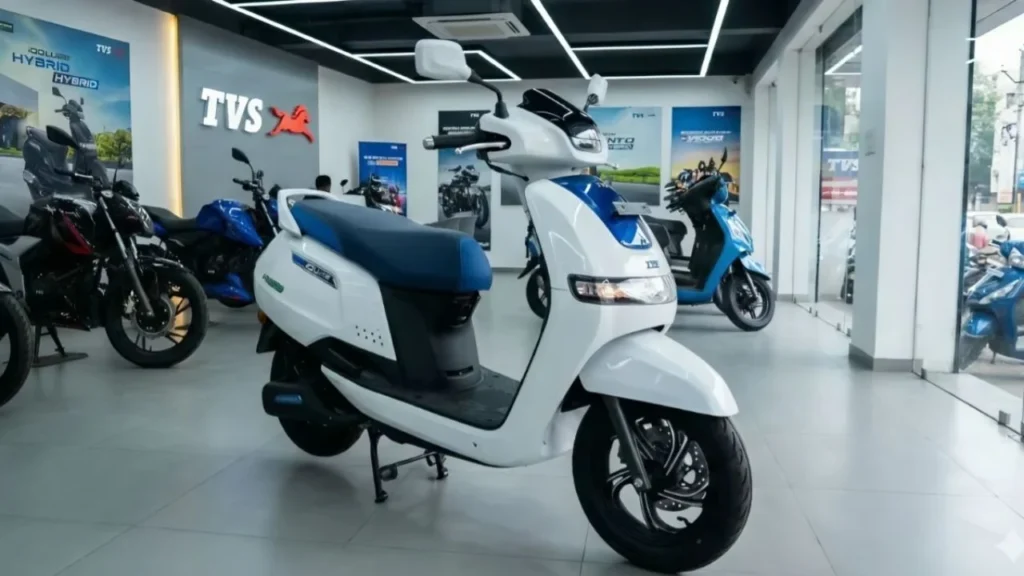

TVS has pulled the wraps off something India’s two-wheeler market has quietly been waiting for. The TVS iQube Hybrid Revealed marks a clear shift from idealistic EV promises to real-world urban practicality. At a time when electric scooters are gaining traction but infrastructure still lags behind demand, this hybrid approach lands with sharp timing.
For millions of city riders, the challenge isn’t whether electric mobility makes sense, but whether it fits daily life without compromises. Charging uncertainty, unpredictable traffic, and longer-than-expected commutes still shape buying decisions. TVS appears to have listened closely, positioning the iQube Hybrid as a confidence-building step rather than a radical leap.
Why the iQube Hybrid Matters Right Now
India’s EV adoption curve is rising, but it isn’t smooth. Metro cities show progress, while many neighborhoods and semi-urban areas remain underserved by charging networks. In that gap, hybrids can play a crucial role.
The iQube Hybrid addresses this transition phase directly. It allows riders to experience electric mobility during routine city runs while keeping petrol support in reserve. That dual assurance could prove decisive for buyers who want cleaner transport but aren’t ready to go fully electric just yet.
How the Hybrid System Works
At the heart of the scooter is an electric-first philosophy. For everyday commuting, the electric motor handles most riding duties, delivering silent, smooth, and emission-free movement through congested streets. Short hops, office commutes, and errands are designed to run primarily on battery power.
When the battery runs low or the ride stretches beyond planned limits, the petrol-assisted system steps in seamlessly. Riders don’t need to flip switches or manage modes manually. The transition is expected to be intelligent and automatic, keeping the experience simple even for first-time hybrid users.
This approach doesn’t just extend usable range; it removes the psychological stress that still surrounds EV ownership.
Tackling Range Anxiety Head-On
Range anxiety remains one of the biggest barriers to electric two-wheelers. TVS seems to have identified this as more than a technical issue—it’s a trust issue. The iQube Hybrid restores that trust by ensuring riders are never dependent on charging alone.
For most users, daily travel will stay electric and affordable. Yet the presence of petrol backup changes how confidently routes are planned. Longer detours, unexpected errands, or missed charging opportunities no longer feel like risks. That flexibility could make hybrids especially attractive to families and daily commuters.
Familiar Design with Everyday Comfort
Visually, the iQube Hybrid stays close to the design language that has already found acceptance. The clean, approachable styling avoids extremes, making it suitable for a wide range of age groups.
The flat floorboard, upright seating position, and wide seat continue to support comfort in stop-and-go traffic. Minor design adjustments accommodate hybrid components, but the overall riding experience remains familiar. For existing TVS customers, that continuity lowers the barrier to upgrading.
Smart Features for Urban Living
Technology remains a strong pillar of the iQube brand, and the hybrid version builds on that reputation. A fully digital display is expected to show navigation, efficiency data, battery charge, fuel status, and energy flow between systems.
Connected features such as smartphone integration and ride analytics add everyday value rather than gimmicks. Regenerative braking and intelligent energy management help maximize efficiency, particularly in dense city traffic where hybrids can shine.
Lower Costs Without Compromise
Running costs are where the hybrid formula begins to make long-term sense. Electric mode handles most short-distance travel, cutting fuel expenses dramatically compared to conventional petrol scooters. Electricity remains significantly cheaper than petrol, and those savings accumulate quickly for daily riders.
At the same time, petrol support means users aren’t forced to plan their lives around charging schedules. Maintenance is expected to stay reasonable, with TVS designing the system for durability and mass-market use rather than experimental complexity.
Pricing and Market Positioning
TVS is likely to position the iQube Hybrid between standard petrol scooters and premium long-range EVs. While upfront pricing may sit above basic petrol models, the overall ownership cost tells a different story.
This strategy targets value-driven buyers who prioritize reliability, flexibility, and sensible spending over headline-grabbing specifications. In a market crowded with either low-range EVs or expensive electrics, the hybrid creates a new middle ground.
Who the iQube Hybrid Is For
The scooter’s appeal spans a wide audience. Daily office commuters, small families, first-time EV buyers, and riders in areas with limited charging access all fit the profile. It also suits users who want lower fuel bills without surrendering range security.
That broad relevance could make the iQube Hybrid a volume product rather than a niche experiment.
A Bridge Toward Cleaner Mobility
India’s electric transition won’t happen overnight. Infrastructure, habits, and trust need time to evolve together. Hybrid scooters like this can accelerate that process by easing riders into electrification without forcing drastic change.
From an industry perspective, the TVS iQube Hybrid Revealed reflects a deeper understanding of local conditions. Instead of copying global EV trends, TVS has tailored a solution to Indian roads, budgets, and usage patterns.
Final Thoughts
The TVS iQube Hybrid doesn’t try to be revolutionary for the sake of it. Its strength lies in balance. Electric efficiency handles daily needs, petrol backup delivers peace of mind, and familiar design keeps adoption easy.
As India moves steadily toward cleaner mobility, hybrids like this could play a defining role. For riders who want progress without pressure, the iQube Hybrid looks set to become a smart, timely, and highly relevant choice in the evolving two-wheeler landscape.